
The Dental Office Cleaning Guide
By Thomas and Danielle Cottle, owners of Beauty & Muscle
What needs cleaning, how often, and who should do it
A short, practical guide for dental office managers, with a cleaning scope you can copy and the questions to ask before you hand anyone your keys.
By Thomas Cottle and Danielle Cottle, co-founders
- Who cleans what: your clinical team or your cleaning company
- A room-by-room cleaning scope you can copy
- Privacy, keys and alarms for after-hours cleaning
- 10 questions to ask before you hire a cleaner
- A 10-minute patient’s-eye walk of your own office
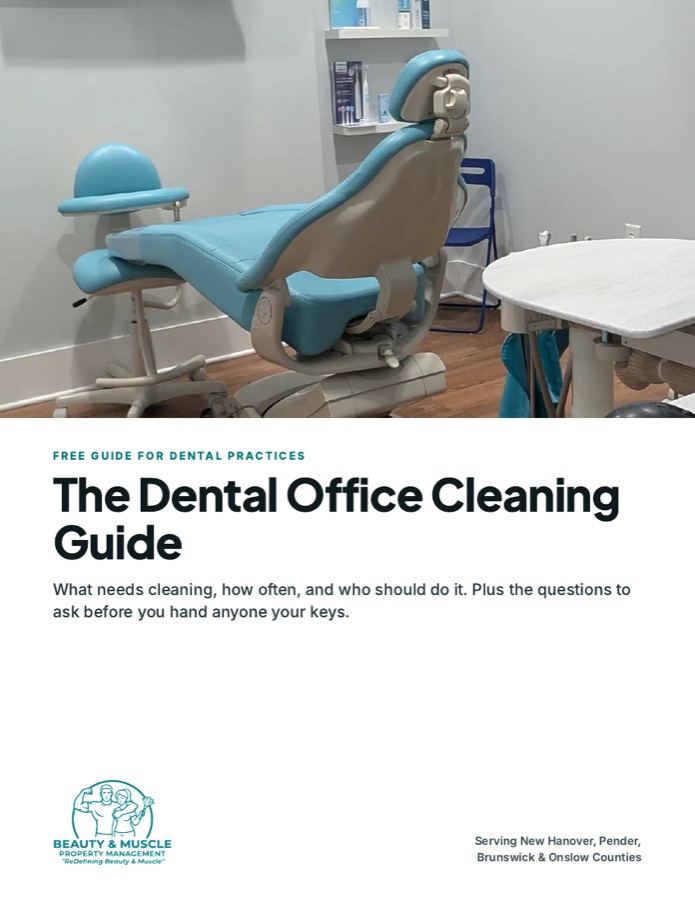
A look inside the guide
Who cleans what in a dental office
Most cleaning problems in a dental practice start with one unanswered question: whose job is this surface? The CDC splits a dental office into clinical contact surfaces (light handles, bracket trays, unit switches) and housekeeping surfaces (floors, walls, sinks). Clinical contact surfaces belong to your team between patients. Housekeeping surfaces are what your cleaning company should own.
- Sharps and regulated medical waste stay with your medical waste vendor, never the cleaning crew.
- Blood and saliva cleanup is handled by your team, under your exposure control plan, before the crew arrives.
- Instruments, handpieces and sterilizers are off-limits to a cleaner.
A room-by-room scope you can copy
The guide lays out every visit, weekly and monthly tasks for reception, treatment rooms (after your team closes them down), restrooms, hallways, the sterilization area, front offices and the break room. A few examples from it:
- Every visit: disinfect door handles and light switches, mop treatment room floors including around the chair base, and restock restroom paper and soap.
- Weekly: dust vents, ledges and baseboards in treatment rooms, and wipe partitions and walls near restroom fixtures.
- Monthly: descale fixtures and detail grout, and dust high ledges and vents in hallways.
After-hours privacy, keys and alarms
After-hours cleaning means someone is alone in a building full of patient information. HHS says janitorial services are generally not HIPAA business associates, because anything they see is incidental, but only if your practice has reasonable safeguards in place. The guide lists them: charts locked up at closing, screens locked, a locked shred bin, records rooms off-limits, a separate alarm code for your cleaner and a written key log.
10 questions to ask before you hire a cleaner
From asking for the insurance certificate itself to checking how restroom cloths are kept out of other rooms, the guide gives you the questions that separate a medical-ready cleaner from a general one. It also lists the red flags, such as a price quoted over the phone without seeing the practice, or a crew offering to handle your sharps.
The full guide is 8 pages and free. Fill in the form above to download it.